

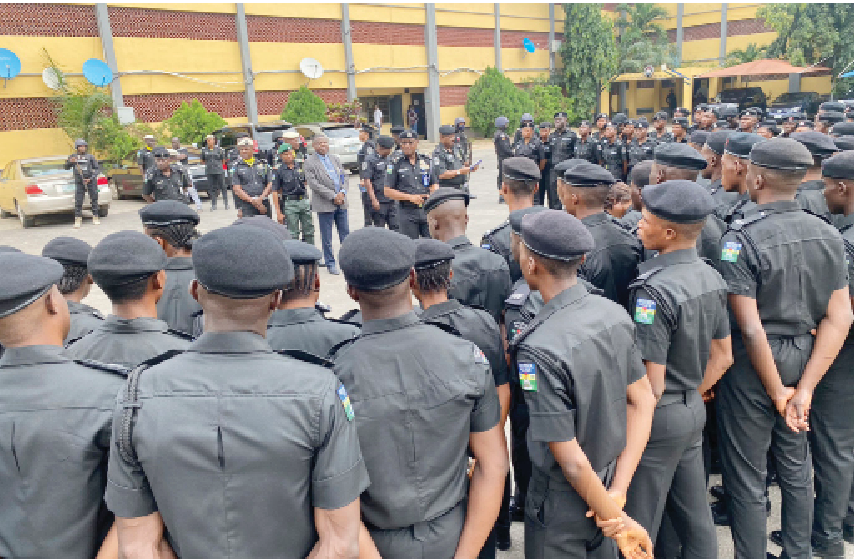
The Role of the Nigerian Military and Police in Internal Security
The issue of insecurity has become a major topic of discussion in Nigeria. While much of the conversation focuses on the military, it is important to recognize that the Nigerian Police Force (NPF) is constitutionally responsible for maintaining internal security and enforcing law and order. The military’s involvement in these operations is typically a supplementary measure, aimed at supporting the police when the situation demands.
According to Section 217 of the 1999 Constitution of the Federal Republic of Nigeria, the duties of the military include defending the country from external threats, maintaining territorial integrity, and securing borders. It also includes suppressing insurrections and acting in aid of civil authorities when called upon by the President. However, this does not mean the military is tasked with restoring law and order on its own. Any such action must be authorized by an Act of the National Assembly.
Despite the clear constitutional framework, the Nigerian military has increasingly taken on roles traditionally assigned to the police. This shift has raised concerns about the long-term implications for the effectiveness of internal security management.
A History of Police Reforms
Efforts to reform the Nigerian Police have been ongoing for decades. Since the establishment of the Fourth Republic, various presidential panels have been formed to address the challenges facing the force. These include:
- 2006: The Dan Mandami-led Presidential Panel on Police Reforms.
- 2008: The Muhammadu Dikko Yusuf Presidential Panel on Police Reform.
- 2012: The Parry Osayande Panel under the Goodluck Jonathan administration.
- 2018: The Presidential Panel on Special Anti-Robbery Squad (SARS) reform.
Despite these initiatives, the police force remains largely unchanged. There is a growing concern that the nation has yet to find a sustainable approach to police reform.
Recruitment Challenges
One of the key issues affecting the effectiveness of the Nigerian Police is the quality of recruitment. The process has often been plagued by irregularities and allegations of corruption. In 2024, there were reports of issues between the Nigerian Police Force and the Police Service Commission regarding the recruitment of 10,000 constables and specialists.
According to the Force Public Relations Officer, ACP Olumuyiwa Adejobi, the recruitment exercise was marred by irregularities, including names of individuals who did not apply, failed initial screening, or were deemed medically unfit. These reports highlight the need for a more transparent and rigorous recruitment process.
Recent Initiatives and Their Limitations
In 2022, the Muhammadu Buhari administration introduced the New Vision for Policing in Nigeria, aiming to create a more effective, accountable, and responsive police institution. This initiative was based on the provisions of the Police Act 2020. However, it still falls short of addressing the fundamental issue of recruitment quality.
More recently, the Revitalised Police Agenda and Transformation Roadmap, launched by the Ministry of Police Affairs in collaboration with the Nigerian Police Force, outlined several focus areas, including infrastructure development, technical efficiency, welfare improvements, community policing, and public trust-building. However, it did not address the critical need to review the recruitment policy.
The Need for Fundamental Change
While the efforts by the police authorities are commendable, they only scratch the surface of the deeper issues facing the force. The foundation of an effective police force lies in the quality of its personnel. Therefore, the recruitment policy must be given the attention it deserves to ensure that only those who are fit for purpose are admitted into the police.
This is not just a matter of administrative reform; it is a crucial step towards building a police force that can effectively serve and protect the citizens of Nigeria. Without addressing the root causes of inefficiency and corruption, any other reforms will remain superficial and ineffective.


