

Testing New Aerodynamic Components in High-Pressure Conditions
In the world of Formula 1, where every millisecond counts, the introduction of new aerodynamic components is a high-stakes game. Unlike Hollywood movies that often depict dramatic transformations, real-world progress in Formula 1 is typically incremental and based on rigorous testing and data analysis. This means that teams spend months refining designs before they even consider testing them on the track.
This weekend’s Belgian Grand Prix presents a unique challenge for teams looking to introduce new parts. The sprint format reduces the number of practice sessions, making it harder to validate new components. Additionally, Pirelli’s experimental tire compounds add another layer of complexity, while the unpredictable weather in the Ardennes region further complicates matters.
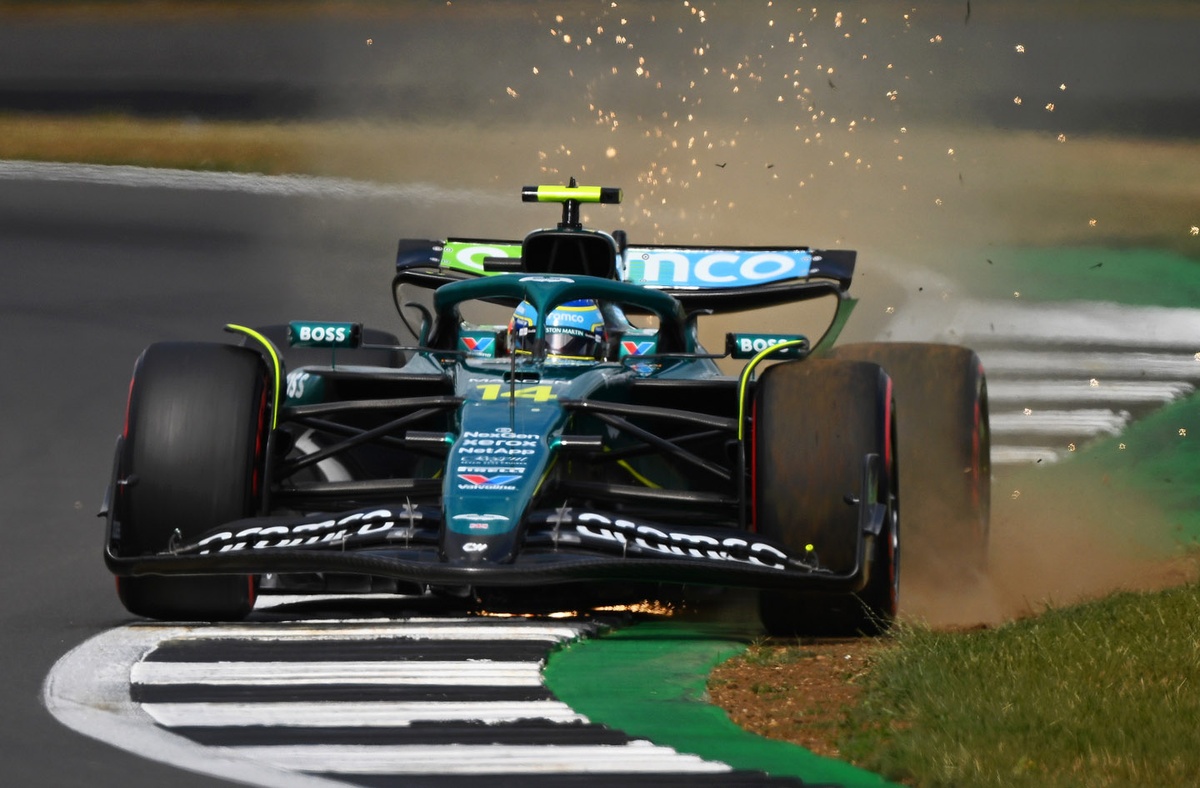
Despite these challenges, both Aston Martin and Racing Bulls are introducing new aerodynamic elements this weekend. For Aston Martin, the package includes new front and rear wings. However, the front wing will only be used on Fernando Alonso’s car during practice for validation purposes.
Alonso explained that the team is trying to bring upgrades as soon as they’re ready. “It was probably forecasted for Budapest or later in the season,” he said. “They managed to bring it a little bit earlier, and we have a chance to test it here. There’s no guarantee we’ll race with it if we don’t have time to test it. But at the same time, I think it was welcome – that there is this push from everyone in the factory to bring the new parts as soon as possible.”
At the British Grand Prix, Aston Martin introduced a floor and top bodywork development. Alonso described the impact of that package as “slight.” This assessment must be viewed in context, as the overall performance at Silverstone was affected by mixed conditions and other teams bringing their own upgrades.
For Spa, Aston Martin is reverting to the previous floor specification because the circuit has lower downforce requirements. The current floor was optimized for ultra-low ride heights, which are not suitable for Spa’s unforgiving layout.
Team principal and CEO Andy Cowell confirmed that Alonso will test the front wing during practice. “We’ll look at the data quickly,” Cowell said. “This is a very low-downforce circuit, and if we’re unsure, we’ll stick with our existing wing. I’m expecting that’s the route we’ll go down. But running in practice will provide some data we can crunch ahead of Budapest, where it’s more likely to be a benefit.”
Aston Martin is also using a low-downforce rear wing, part of the rear-wing family they’ve been running all season. This variant is designed to be used throughout the race weekend.
The current sprint format offers some advantages. Parc ferme rules are less restrictive, allowing teams to make changes to car specifications on Saturdays between the sprint race and grand prix qualifying. This flexibility means that teams can swap out either wing between practice and sprint qualifying, or even between the sprint race and grand prix qualifying.
Alonso noted that a front-wing change can be achieved in less than 30 seconds. “If we can’t test it in FP1, maybe we opt not to fit it for the quali,” he said. “At the same time, I think we have the parc ferme open after the sprint race, so we could use the first part of the weekend as a test and then race on Sunday with the best spec.”
Alonso’s comments also reflect the team’s position in the championship. Currently in eighth place, Aston Martin is focused on improving its relative performance. Earlier in the week, Alonso struggled to show enthusiasm for the battle for fifth place in the constructors’ championship, stating, “There is not much more to do.”
This weekend’s challenges highlight the delicate balance between innovation and practicality in Formula 1. While teams strive to push the boundaries of technology, they must also navigate the constraints of limited testing time, unpredictable weather, and the need for reliable performance. The introduction of new components under such conditions is a testament to the ingenuity and resilience of Formula 1 teams.


