

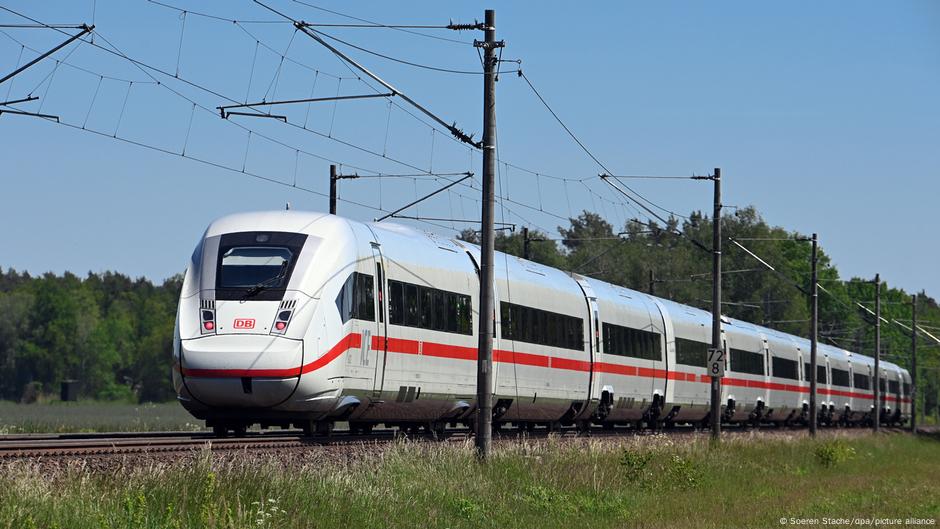
Deutsche Bahn deals with the yearly challenge of the summer holiday period. MG NEWS DAY’s Jens Thurau covers his train trip from Berlin to the North Sea coast and back, which encountered multiple problems.
A vacation to the North Sea island of Föhr during the summer sounds like an excellent plan, I considered. I can disconnect from my news updates and put aside thoughts of conflicts, Donald Trump, right-wing populism, and the poor condition of German transportation systems. Once I arrive on Föhr, I can spend the entire day on the beach, look out at the ocean, and unwind.
I reserved a comfortable hotel and chose to take the morning train straight from Berlin to Dagebüll, a coastal village from which ferries leave for the island. This was supposed to be a calm and eco-friendly beginning of our trip with my girlfriend to the Wadden Sea. Or so we believed.
We ought to have been more aware. Naturally, we have heard, for instance, that Switzerland—where 98% to 99% of all trains operate precisely on schedule—has ceased permitting German trains to cross the border due to their well-known lack of punctuality.Just 62% are on track. Currently, passengers traveling from Germany must transfer to Swiss trains in Basel, in order to avoid causing disruptions in the traffic flow of our southern neighbor.
However, during our journey to the north, everything was okay. Initially.
Our train departed Berlin on schedule, and we managed to reach Niebüll. In this small town in North Frisia, the train splits into two sections: The first continues towards Sylt, the affluent party island. The second heads straight to Dagebüll, which has a ferry terminal. In theory.
Shortly before arriving at Niebüll, an announcement was made: “Today, the whole train is heading to Sylt. Anyone wishing to go to Föhr needs to disembark in Niebüll and take the local train to Dagebüll.”
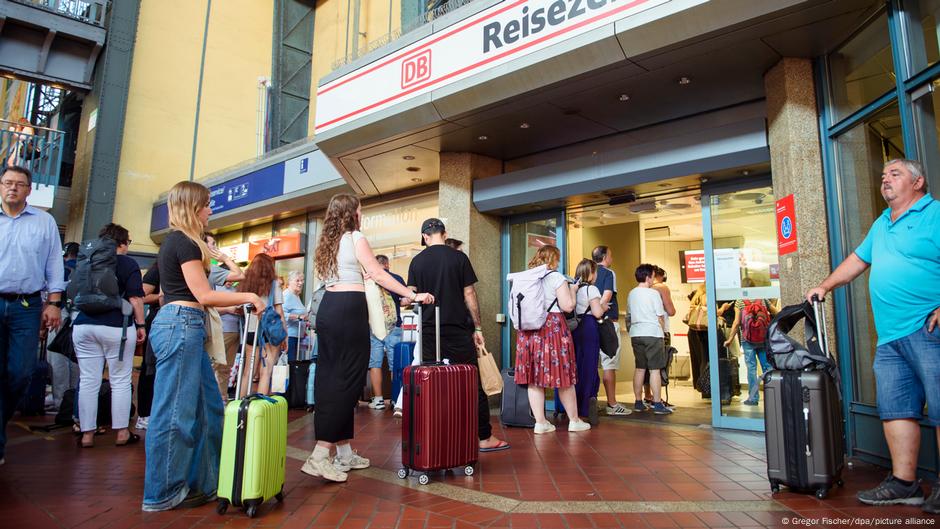
That’s fine, we thought, it won’t disrupt our plans. To be honest, getting our suitcases off the fast train and onto the extremely crowded regional train wasn’t quite how we had pictured the beginning of our holiday.
No details were provided regarding the cause of this schedule change, yet we remained unaffected. We have grown used to dealing with unexpected alterations in the itineraries and timetables of Deutsche Bahn. There are numerous tales about trains that have broken down, returned, or experienced lengthy delays, with no one appearing to take responsibility.
Finally on Föhr
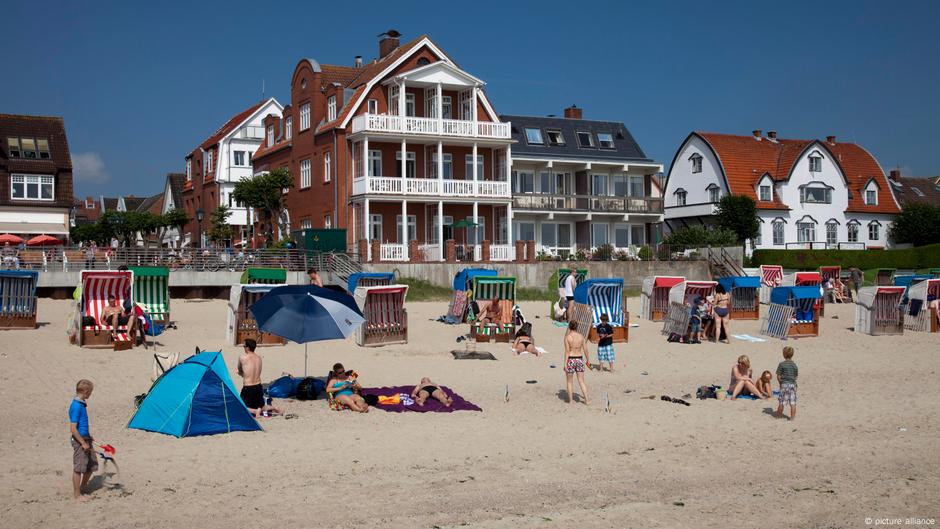
When we finally reached Föhr, everything turned out exactly as we had wished. We looked at the sea.
Even the fact that most pubs, bars, and restaurants only take cash and don’t accept credit cards was an issue for only a small number of international visitors. However, we all know that Germany just needs a bit more time to keep pace with global technological advancements. We recall former German Chancellor Angela Merkel stating in 2013 that the internet was “Neuland” (“uncharted territory”). Such is life in one of the world’s top industrial countries.
The railways perfectly match this scenario. For many years, minimal investment was made in the roughly 33,500 kilometers (20,800 miles) of tracks. Bridges, switches, and signal boxes are now in disrepair or outdated.
After several pleasant days on Föhr, we began our trip back, feeling refreshed. Once more, we were set to take the “direct train” from Dagebüll to Berlin.
A train was waiting for us on the platform. Yet again, it wasn’t the fast train we were hoping for, but the slow one heading to Niebüll. Locals mentioned that this situation has been ongoing for a while due to a lack of staff. The direct train to the capital no longer exists in reality. It’s still listed in the schedule, but what significance does a timetable hold for Deutsche Bahn?
Sheep on the tracks
Shortly after we began our trip, another announcement was made: A train in front of us had collided with a group of sheep on the tracks. We were informed that a railway emergency officer, a shepherd, a hunter, and other officials were “on their way” to the accident site. No additional information was provided. As per the train driver, the local authorities who could offer more details were unavailable, which was unfortunate.
Our train attendant took the lead and contacted the conductor of the train involved in the incident in front of us using his phone. It was revealed that the track had been cleared.
Nevertheless, we were still not allowed to proceed with our trip. Even our helpful conductor was unaware of the reason. “I’m about to do something I’ve never done in my long career with the railway,” he said, and started handing out gift vouchers. “Maybe you’ll receive a bouquet of flowers,” he thought aloud. The vouchers had “Deutsche Bahn says sorry” printed on them. We were impressed.
From Hamburg to Berlin
Then came another surprise: due to the extended delay, the train had been “suspended” in Hamburg. A polite way of stating: the journey ends here. We were among the fortunate ones, managing to find a swift Intercity Express ready to carry us to the capital. Other travelers were not as lucky.
“I’ll be completely honest with you,” our knowledgeable train conductor said. “We aren’t permitted to proceed further because we’ve all worked beyond our allowed hours,” he explained. We questioned if there was any backup staff available for situations like this. “There used to be, but that’s no longer the case,” he responded.
An increasing number of railway workers are quitting, unable to tolerate the growing hostility and irritation from travelers. Several individuals claim they no longer wish to be employed by a company that is driving itself into ruin.
Ultimately, four hours later than scheduled, we arrived in Berlin.
Starting August 1, conditions will deteriorate. Hamburg to Berlin, one of Germany’s primary railway lines, is set to be fully closed.Extensive building workis scheduled to start on the line, which is 280 kilometers (174 miles) in length and transports as many as 30,000 passengers daily. The project is expected to last nine months. Throughout this period, long-distance trains will need to follow a 100-kilometer alternative route. However, if transportation becomes more efficient afterward, we will all find it worthwhile.
Regarding August 1: The railway company plans to send us their apology gift by that date. However, it might experience a slight delay.
I believe the next time, we will go to Föhr by car.
This piece was initially composed in German.
While you’re here: Each Tuesday, MG NEWS DAY editors summarize developments in German politics and society. You can subscribe here for the weekly email newsletter, Berlin Briefing.
Author: Jens Thurau


