


Simone Heng was at the height of her professional success inDubaiwhen she received a phone call from her sister while she was conducting a promotion at the mall for her radio job.
“Simone, where are you?” her sister called out fromPerth, Australia. ‘I believe it would be best if you returned home.’
Her mother experienced a stroke caused by her rare genetic disorder and was dealing with paralysis. They discovered her lying at the bottom of the shower. They had no idea how long she had been there.
I’ll never forget that,” said Simone, 41, to the Daily Mail. “I remember just that feeling of guilt – how long was she at the bottom of the shower? How long until someone knocked on the door?
As she boarded a flight from Dubai to Perth, she sensed that her life was about to take a dramatic turn. That journey in 2013 was initially planned to last just two weeks, but when she saw her mother in the hospital bed, pale and weak, with unfocused eyes and experiencing arm spasms, she realized that things would not improve.
I recall seeing her in that condition and saying, ‘Your life is going to change forever now,’ ” she said to the Daily Mail. “I am now the protector, and I believe that’s when we, as kids, become our parents’ parent, and the roles switch.
At age 29, Simone, a global radio host who was employed at Virgin Radio Dubai, began a 1.5-year period of caregiving, which was marked by intense loneliness and sorrow that left her overwhelmed.
Currently, she has written a book titled Let’s Talk About Loneliness and aims to alert others about the unforeseen impact of caring for a sick parent.

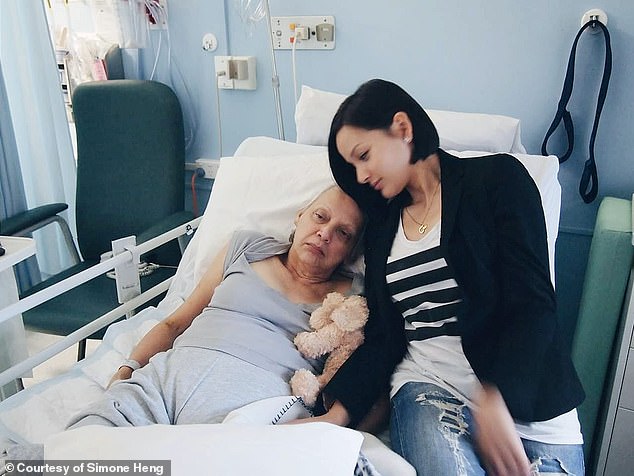
Simone gathered her belongings and returned to her home in Perth as they transferred her mother to a care center.
Even with assistance, Simone and her sister were required to manage their mother’s possessions at her house and handle the arrangements of suddenly needing to take care of their parent.
The sisters divided the responsibilities. Her sister would handle the logistical details of care – including physiotherapy expenses, scheduling massages, and providing financial support – while Simone would manage the emotional side, like ensuring her mother’s happiness.
However, the first challenge Simone encountered was managing the process of reducing her mother’s household.
And it’s now the top advice she’d give to others facing similar situations: “First and foremost, if your parents are still mentally sharp and you can persuade them to move to a smaller place, please do so.”
The last thing you require is the logistical challenge of cleaning that house while they are already unable to function.
Even though her mother used a wheelchair, her mind remained sharp and focused on her cherished possessions, creating tension between the mother and daughter.
“The brain had not yet deteriorated. The body was in a wheelchair, but the mind was still concerned with possessions and similar matters,” Simone said to Daily Mail.
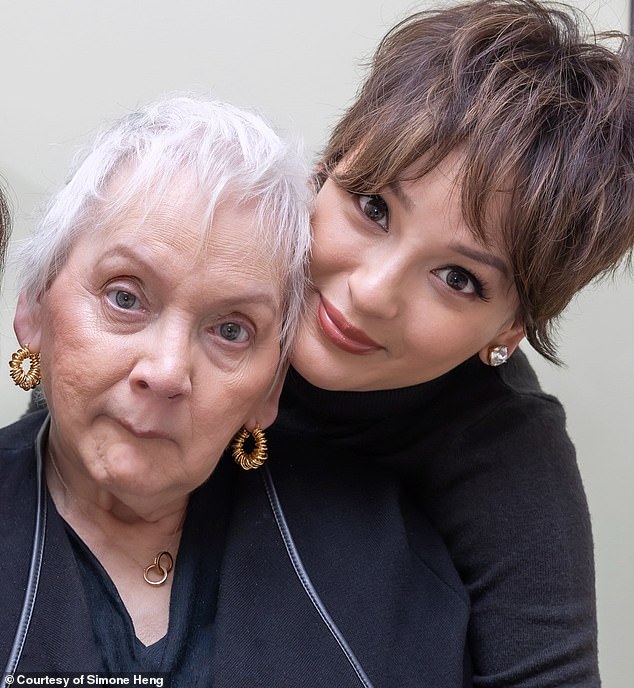
The second thing she unexpectedly encountered was witnessing her mother transition from being a fully independent adult to requiring the same assistance as a child.
I witnessed my mother’s diaper being changed in front of me,” she said. “You need to be ready for that moment, when they turn into a baby—especially if you have very strict parents like I had with my mom.
You emotionally need to get ready for that loss of respect and seeing them gradually break down. And I wish I had been ready for it. I wish someone else had told me: ‘Look, you need to just be cautious about this.’
However, her primary challenge, and the third issue she alerts individuals to when they start caring for a loved one, is the loneliness associated with caregiving.
Every day, she awoke with only her mother and her requirements on her mind. As the days passed, Simone faded away. She ceased applying makeup and stopped paying attention to her appearance.
“At the end of the one and a half years, I stopped looking in the mirror entirely,” she said.
And for Simone, who was not yet 30, she felt extremely isolated in the world of caregiving.
Only now, as her friends reach their 40s, are they starting to face what she endured a decade prior.

Unlike death, where the heart recovers over time and the physical weight becomes easier to bear, this is not the case with a long-term illness.
“You see it at the start, when dad died, people brought meals. They recognized that someone had passed away. And eventually, it’s temporary,” she told the Daily Mail.
When an individual is dealing with a long-term chronic condition, there’s essentially no end in sight. Initially, the community offers great support, but over time, it ultimately falls on the children to manage things.
And her own family saw her as youthful and energetic, fully capable of managing the stresses and responsibilities of caregiving.
But all it did was leave her feeling “extremely, extremely isolated.”
She continues to experience guilt for the resentment she harbored back then and mourns the person she once was.
In Dubai, she was a very accomplished broadcaster, with a face that was well-known throughout the city. She once appeared on a Dove billboard located outside the 7-star Burj Al Arab hotel.
“I mourned it for many years afterward. I believe that in the moment, you’re caught between fight or flight, and I was raised to believe that this is what a good Asian daughter does, and it was never questioned,” she said.
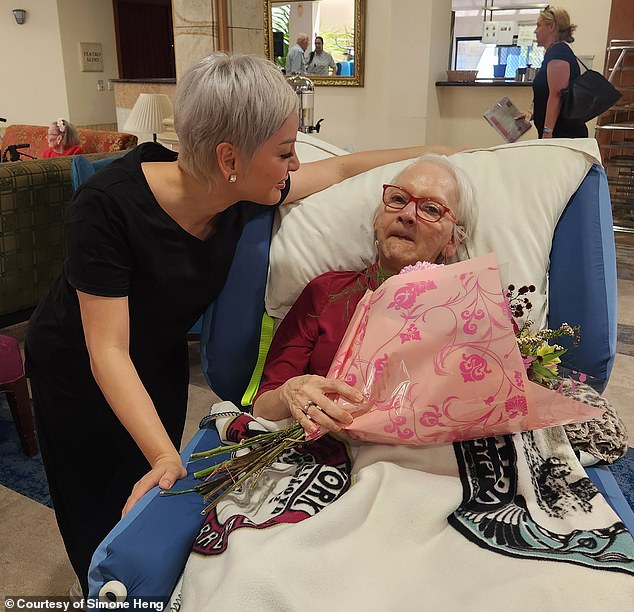
And it had been instilled in me since childhood. My mother repeated it to me countless times: ‘You know we don’t place our people in homes.’ This is how it’s done.
And thus, I was unquestionably obedient to the programming. However, it wasn’t until I recognized how significantly the entire experience transformed me on a cellular level, and when I returned to work.
Simone left Perth for Singapore after 18 months. She had reached her limit, and a psychiatrist advised her to depart before it was too late.
I was in very poor mental health,” she said. “The psychiatrist told me: ‘You know you weren’t meant to do this,’ and that’s why [I quit].
I still feel guilty today, believing I’m not made of stronger, more selfless material, and he says: ‘You know, you need to put on the face mask. You’re a creator, and you must return to a place where you can do that.’
She opted for Singapore because of its closeness to Australia, enabling her to come back every 90 days to see her mother.
Her sibling, who continues to reside in Australia, currently handles most of the caregiving responsibilities, yet for Simone, this arrangement proves more effective.
“It remains challenging, you understand, to overcome that guilt and that conditioning,” Simone said to Daily Mail.

Between 2015 and 2017, Simone attended therapy sessions to deal with the situation and eventually emerged stronger.
Currently, she recommends that children who take on caregiving roles participate in support groups and be kind to themselves regarding the guilt they experience.
“Be kind to yourself,” she said.
Although the experience was challenging, it provided her with a viewpoint that has become her guiding principle.
“No one is discussing their occupation, the amount of money they make, or what kind of watch they own,” she said.
Individuals are simply longing for human interaction. And I believe that was very motivating for the work I am doing today; we are truly here for connection and a pleasant experience.
And that, I carry with me every day. It serves as the guiding principle behind all my choices.
“Let’s Talk About Loneliness” by Simone Heng is now available, published by Hay House UK.
Read more


