

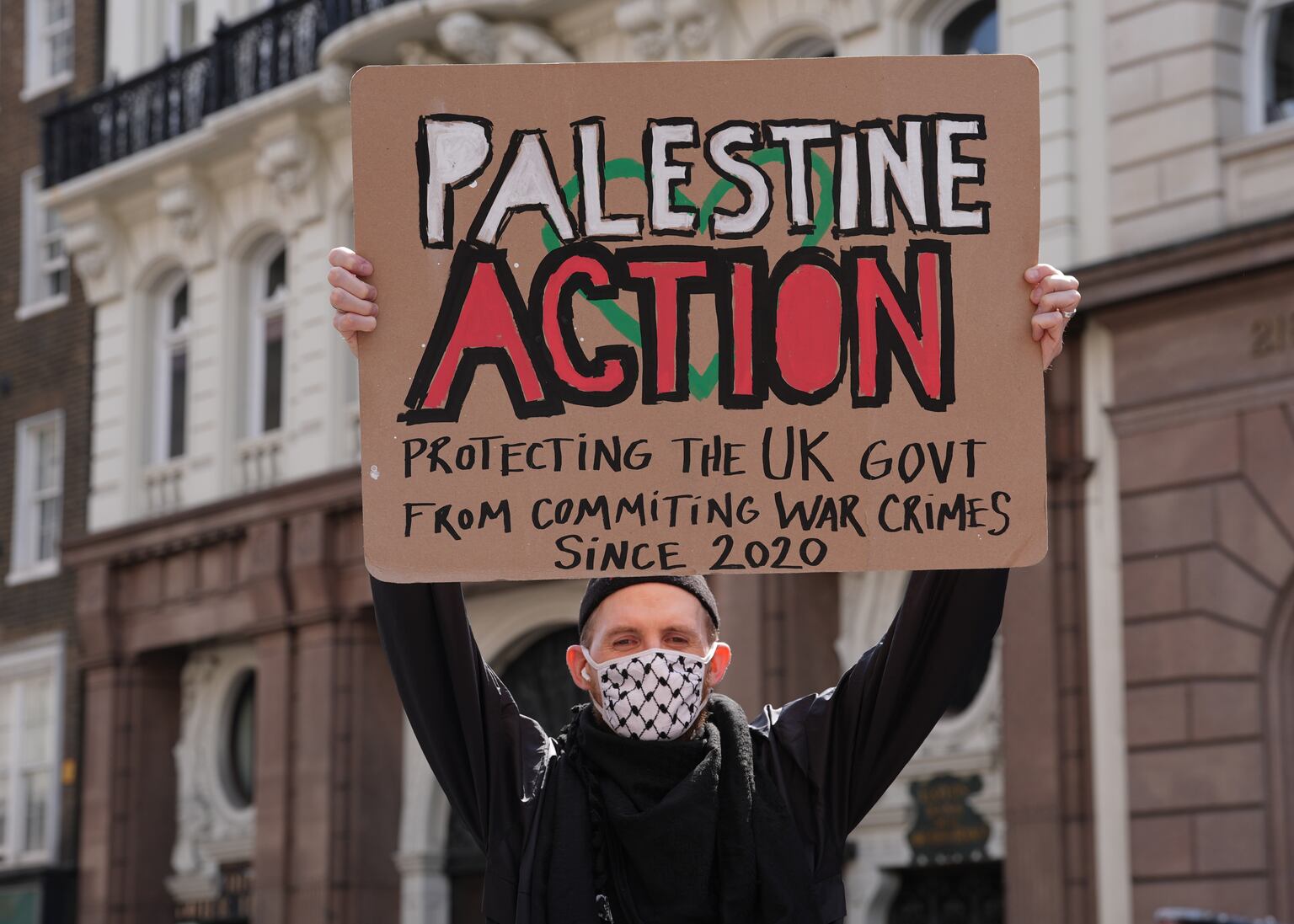
Legal Challenge Against the Proscription of Palestine Action
The co-founder of the banned group Palestine Action, Huda Ammori, is preparing to seek permission from the High Court to contest the Home Secretary’s decision to ban the organisation. This will take place during a hearing scheduled for Monday. The move comes after the group was designated as a proscribed entity under anti-terror laws, following an incident in which two Voyager planes were damaged at RAF Brize Norton on June 20.
Ms. Ammori aims to challenge the decision made by Yvette Cooper, the Home Secretary, who cited the vandalism of the aircraft as grounds for the ban. The damage caused by the incident was estimated to be around £7 million, and Ms. Cooper described the act as “disgraceful.”
Despite her efforts, Ms. Ammori faced a setback when she failed to secure a temporary injunction to prevent the ban from taking effect. The Court of Appeal dismissed her challenge just hours before the proscription came into force on July 5. Now, she is seeking to proceed with a legal challenge, which will be heard by Mr Justice Chamberlain at the Royal Courts of Justice on Monday at 10:30am.
Under the Terrorism Act 2000, membership or support for Palestine Action is now considered a criminal offence, with penalties including up to 14 years in prison. The government has expressed its opposition to allowing the legal challenge to proceed, and the case will be closely watched.
Background of the Incident and Arrests
The incident that led to the ban involved four individuals—Amy Gardiner-Gibson, Jony Cink, Daniel Jeronymides-Norie, and Lewis Chiaramello—who have all been charged in connection with the damage to the planes. They are set to face trial in early 2027.
Since the ban came into effect, there have been numerous arrests at protests across cities such as London, Manchester, and Cardiff. Among those arrested was an 83-year-old reverend, highlighting the widespread impact of the proscription.
During a recent hearing, Raza Husain KC, representing Ms. Ammori, argued that the proscription was an “ill-considered, discriminatory and authoritarian abuse of statutory power.” He claimed that the Home Office had not adequately explained the national security reasons behind the decision.
Blinne Ni Ghralaigh KC, also acting for Ms. Ammori, warned that the ban could have far-reaching consequences, potentially leading to self-censorship among members of the public. She stressed that the harm caused by the ban would be significant and difficult to reverse.
Government’s Position and Legal Arguments
Ben Watson KC, representing the Home Office, suggested that Palestine Action could pursue its challenge through the Proscribed Organisations Appeal Commission (POAC), a specialist tribunal, rather than the High Court. However, the court has ruled that the decision to ban the group was made as early as March, preceding the incident at RAF Brize Norton.
Mr Justice Chamberlain stated that the potential harm of blocking the ban was insufficient to outweigh the public interest in maintaining the current order. He also noted that some of the concerns raised by the claimant were “overstated.”
At a late-night Court of Appeal hearing, the Lady Chief Justice Baroness Carr, along with Lord Justice Lewis and Lord Justice Edis, rejected the bid to challenge the High Court’s decision. They concluded that there was “no real prospect of a successful appeal,” reinforcing the government’s position on the matter.
Ongoing Implications and Public Response
The ongoing legal battle highlights the complex interplay between national security, civil liberties, and the right to protest. As the case moves forward, it will continue to draw attention from both supporters and critics of the proscription. The outcome may have lasting implications for how similar groups are treated under UK law.
With the hearing set to take place, the legal community and the public will be watching closely to see whether the court will allow the challenge to proceed. The case underscores the broader debate about the balance between security and freedom, and the role of the judiciary in ensuring that decisions are made fairly and transparently.


