

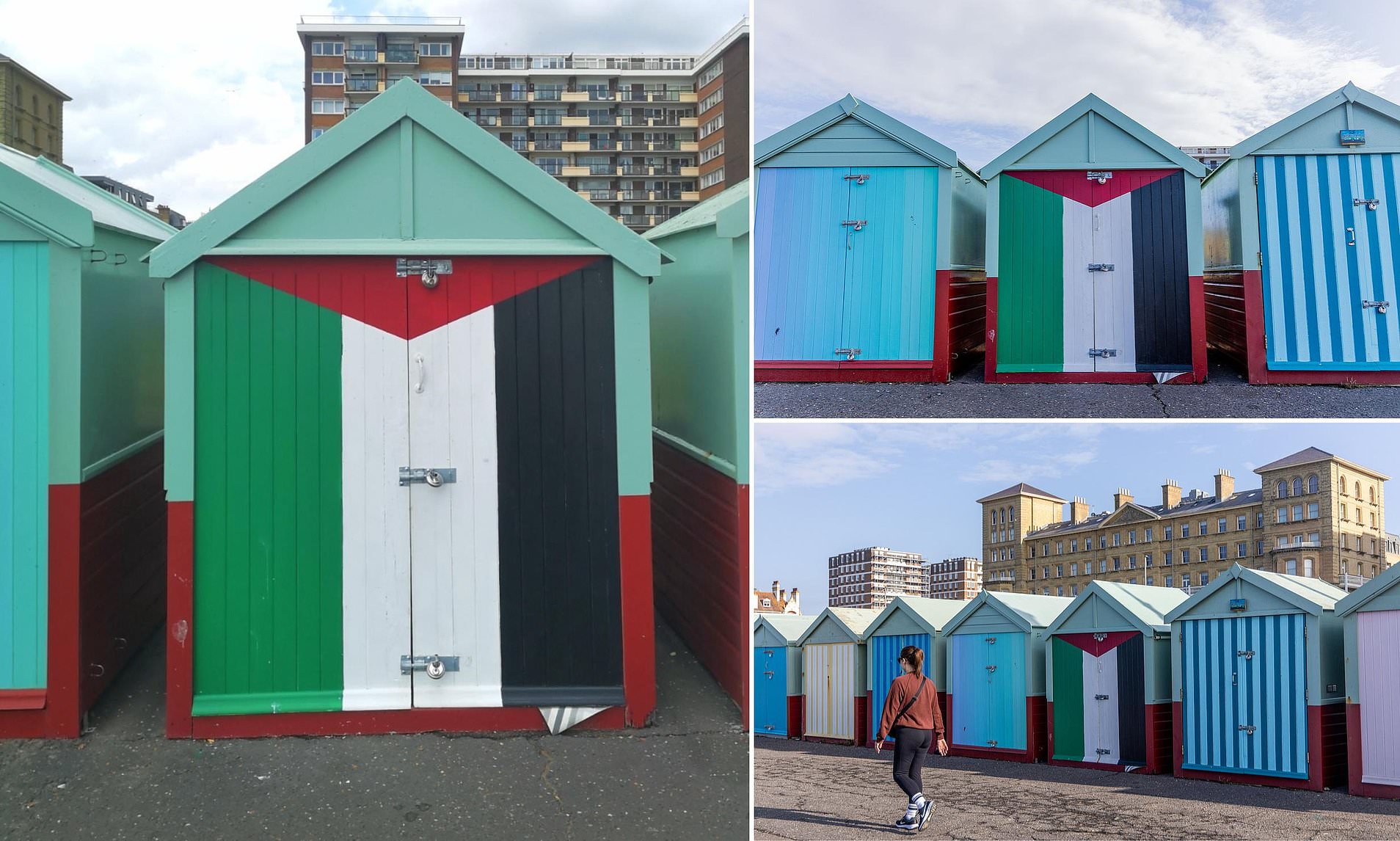
A Conflict Over a Beach Hut and a Palestinian Flag
Brighton and Hove City Council has sparked controversy after ordering the owner of a beach hut to repaint it, citing that its current design violates the standards set for such structures. The issue centers around Alison Lesley, a retired psychotherapist who has owned her beach hut for six years. According to the council, the hut’s appearance—featuring a Palestinian flag—is in breach of the licence agreement, which only permits strictly vertical stripes or solid colors.
The council issued a directive to Lesley, initially giving her just three days to remove the design, though this was later extended to a week. If she fails to comply, the council has stated they will undertake the repainting themselves and charge her for the work. In an email addressed to Lesley, a council member emphasized that there is a “very strict policy on the presentation of beach huts.”
Defending their decision, the council claimed that the Palestinian flag could interfere with community cohesion and might cause distress and upset. However, Lesley described the ruling as “one-sided” and “unfair.” She pointed out that another beach hut along the same seafront has been painted with a French flag for the past two years without any issues. Lesley argued that for every person who made a complaint, she could find ten who would support her choice. She explained that the painting was intended to show solidarity with those affected by the ongoing Israel-Hamas conflict.
Local councillor Birgit Miller, cabinet member for culture, heritage, and tourism, reiterated the council’s stance, stating that the beach huts are an “iconic feature” and must be protected. She added that it is important for licence holders to adhere to their agreements.
The Hove Beach Hut Association, a local group representing residents who own beach huts, has had mixed reactions to the council’s decision. Some members expressed hope that Lesley would lose her licence due to the controversial painting, while others criticized the council as the “fun police,” arguing that the decision was unjustified.
This dispute comes amid broader tensions between the council and beach hut owners. In October 2023, Brighton and Hove Council proposed a 10% effective sales tax on beach hut owners to address a £70 million budget shortfall. This tax, based on the sale price from April 2023, was suggested as an alternative to increasing the annual £503.60 licence fee and ownership transfer fee of £82 if a hut is sold.
Owners have strongly opposed these proposals, calling them “extortion” and accusing the council of bullying and coercive behavior. With huts selling for up to £35,000, the new tax could mean that owners pay as much as £3,500. Paula Ford, who has owned a beach hut for 30 years, called the move “outrageous” and described it as a “stealth tax.”
She emphasized that the huts are privately owned by residents, even though they are located on land owned by the council. There are currently 459 beach huts on Hove seafront, all privately owned, with annual licence fees generating around £192,000 for the council. The value of these huts ranges from £25,000 to £35,000, depending on their location and condition.
David and Susie Howells, who have owned their beach hut for 20 years, highlighted the role of beach huts in enhancing the seafront experience for both residents and visitors. Serena Mitchell, who purchased her hut in 2017, also criticized the proposal, referring to it as a “stealth tax.”
Councillor Alan Robins, chair of the council’s culture, heritage, sport, tourism, and economic development committee, defended the proposed fee, stating that the council currently does not benefit from the profits made on the sale of beach huts. He argued that the additional revenue could be reinvested into essential services like lifeguards. He acknowledged the financial challenges faced by local government and stressed the importance of using the funds to support life-saving services.
The situation remains unresolved, with many residents expressing frustration over what they see as an overreach by the council. As the debate continues, the conflict over a single beach hut has become a symbol of deeper tensions between private property rights and local governance.


