

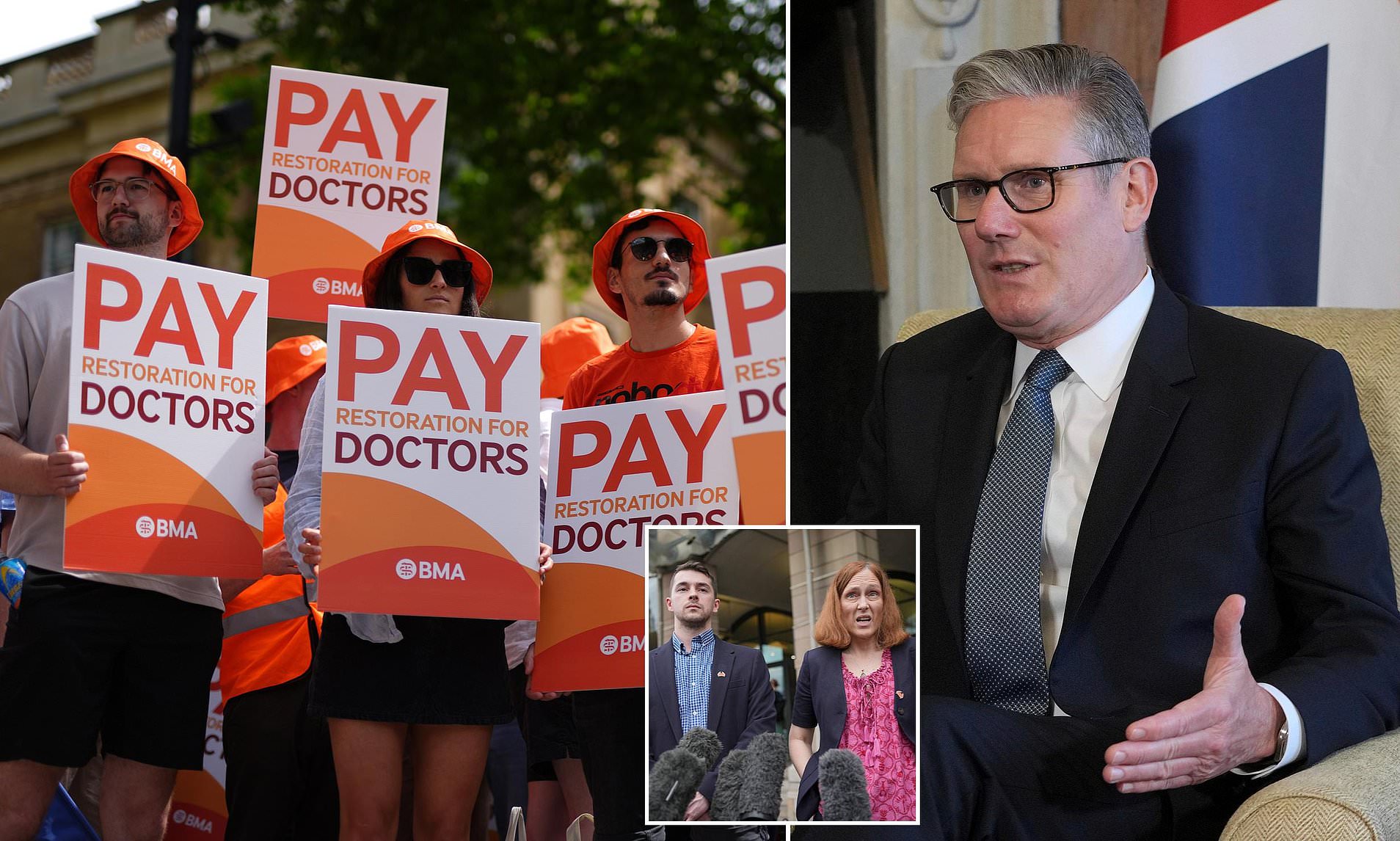
Resident Doctors in England Launch Five-Day Strike Over Pay Dispute
Thousands of resident doctors across England have initiated a five-day strike, demanding an additional 29% pay increase after failed negotiations with the government. The walkout began this morning at 7 am, with doctors gathering on picket lines, which is expected to impact patient care and hospital operations.
The National Health Service (NHS) has urged members of the public to seek care during the strike and to attend scheduled appointments unless notified otherwise. GP surgeries will remain open as usual, and urgent care services, including A&E departments and NHS 111, will continue to operate. This guidance aims to minimize disruption for patients while ensuring essential healthcare remains accessible.
Sir Keir Starmer, leader of the Labour Party, made a last-minute appeal to resident doctors, warning that the strikes would “cause real damage.” He emphasized that the actions of the British Medical Association (BMA) Resident Doctors Committee (RDC) could harm both patients and the NHS. “My appeal to resident doctors is this: do not follow the BMA leadership down this damaging road,” he said in a statement published in The Times.
Starmer highlighted the potential consequences of the strike, including delayed treatments, late diagnoses, and risks to long-term health. He also criticized the lack of public support for the strikes, arguing that they threaten progress made in rebuilding the NHS over the past year. He noted that waiting lists are now at their lowest level in two years and that for the first time in 17 years, waiting lists decreased in both April and May.
Wes Streeting, the Health Secretary, sent a personal letter to resident doctors, expressing regret over the current situation. He acknowledged the government’s commitment to improving working conditions and career progression for doctors but stated that a larger pay rise was not feasible this year. Streeting also expressed concerns about the BMA RDC’s engagement in good faith during negotiations.
He emphasized that the government had made significant progress in addressing the concerns of resident doctors, including a 28.9% pay award under Labour. However, he argued that strike action should be a last resort, especially after such a substantial pay increase. Streeting was prepared to negotiate on work conditions and career development, including measures to reduce costs associated with training and improve working environments.
Despite these efforts, talks with the BMA RDC have stalled, leading to the decision to strike. Streeting expressed disappointment, stating that the strikes would hinder progress in turning the NHS around. He reiterated his determination to minimize disruption to patients and continue the recovery efforts initiated over the past year.
Daniel Elkeles, chief executive of NHS Providers, warned that staff will work “flat out” to manage patient care during the strike. He urged striking doctors to consider the impact of their actions on patients, the NHS, and themselves. He also mentioned that NHS trust leaders may take steps to limit locum shifts for resident doctors during the strike, aiming to maintain service continuity.
Rory Deighton, acute and community care director at the NHS Confederation, stated that the strikes were not inevitable and placed responsibility on the BMA for the disruption caused to patients. The BMA, however, argues that real-terms pay for resident doctors has fallen by around 20% since 2008 and is pushing for full “pay restoration.”
In national newspaper advertisements, the BMA highlighted the pay disparity between resident doctors and non-medically qualified assistants, claiming that a newly qualified doctor earns significantly less than their assistant counterparts. The union is seeking an additional £4 per hour to restore pay levels, emphasizing that this is a fair request given the critical role of doctors in the NHS.
The Department of Health and Social Care (DHSC) criticized the BMA’s advertising campaign, calling it “disingenuous” and pointing out that the average earnings of resident doctors are higher than those of the average full-time worker. They noted that first-year resident doctors earn £43,275 annually, with second-year doctors earning £52,300 and those in specialty training earning up to nearly £75,000.
The Conservatives accused Labour of enabling further strikes by making what they described as a “spineless surrender to union demands” last year. Shadow health secretary Stuart Andrew criticized the government for disrupting care and ignoring patient needs, calling it a betrayal of the NHS.
As the strike unfolds, the focus remains on minimizing disruption and ensuring that patients receive the care they need. Both sides continue to engage in discussions, with hopes that a resolution can be reached to prevent future strikes and address the concerns of resident doctors.


