


Third in the team’s championship heading into London, theDS PenskeThe team is even more committed than before to securing its position. To achieve this, it must complete the race and earn points by having both cars finish within the top 10, a feat the team has accomplished multiple times this season. However, in Formula E, each race is unique, particularly towards the end of the championship when some drivers have nothing left to lose and are more inclined to take greater risks.
On Saturday morning, the ExCel London paddock was greeted by cloudy skies. At 10 a.m., the cars hit the track for free practice in challenging conditions where grip remained unstable. While the air temperature was 20C, the asphalt continued to be difficult, with certain areas offering low grip and some damp patches. The unique characteristics of the track, which included both inner and outer sections, added to the complexity: the shifts between these surfaces led to abrupt movements that drivers had to manage skillfully. As on the previous day, the teams concentrated on adjusting their setups in pursuit of the ideal lap time.
During the qualification round, Maximilian Guenther delivered an impressive showing in Group A, recording the second quickest time and earning his spot in the duels.Jean-Eric Vergne, in Group B, also displayed some strong performance, taking the lead for more than half of the session. The second part was more challenging, and he ultimately fell short of a spot in the final qualifying session by four tenths of a second. Later, Guenther lost his battle againstNyck de Vries(Mahindra), and the two DS E-Tense FE25s secured sixth place with Guenther and fifteenth with Vergne.
A brilliant tactic and carefully organized return: DS Penske was rewarded
DS Automobiles, which has participated in Formula E since 2015 and has been affiliated with Penske MG NEWS DAY since the Gen3 era, is leveraging its advanced strategic capabilities. This initial race in London, consisting of 37 laps, featured, as is standard for double-headers, a required Pit Boost that involves a 30-second stop to recharge up to 3.85kWh when the battery level is between 40% and 60%.
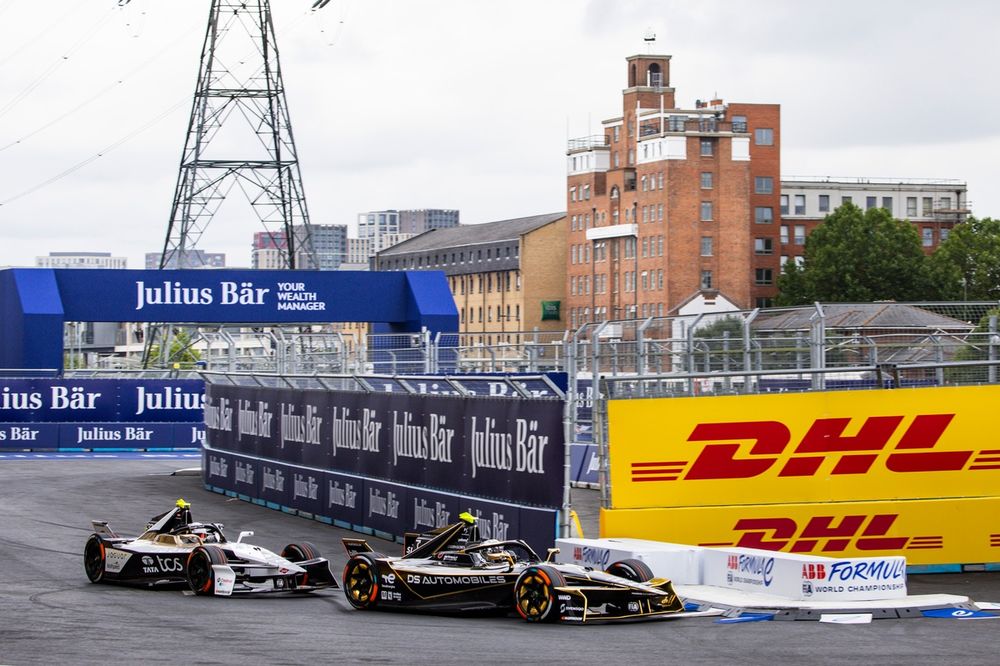
This is solely a strategic move, as recharging is not technically required to reach the chequered flag. Therefore, the skill of timing this ‘boost’ during the race turns into a crucial tactical factor. Vergne made a strong start, moving up four positions in the initial corners. However, his teammate Guenther was trapped behind multiple drivers and his car was forced into the wall.
As the sole representative of the Franco-American team on the track, Vergne carefully implemented his energy strategy. On this twisty urban circuit, where each overtaking attempt involves risk, the French driver used his experience and accuracy to climb through the ranks. In ninth position, he waited for the ideal moment to activate his two attack modes and use his Pit Boost, which he did just before the midpoint of the race.
As the attacks persisted and the cars exited their power boost periods, in the last third of the race, Vergne was in sixth position due to a well-planned strategy from the DS Penske engineers. With five laps remaining, a second safety car period further reduced the gaps, while several drivers, including Vergne, had already engaged their final attack mode.
An additional lap was introduced by the race director, although the positions stayed the same. Starting from 15th, Vergne delivered an outstanding recovery to end up in sixth place. It was a strong and clever performance, characteristic of the French driver and DS Penske’s precise strategy. This racing expertise had previously allowed him to climb from 18th to third place in the second race of the Berlin E-Prix just two weeks prior.
The final race of the year on Sunday will provide DS Penske with its last opportunity to secure its standings in both the team and driver championships.


