

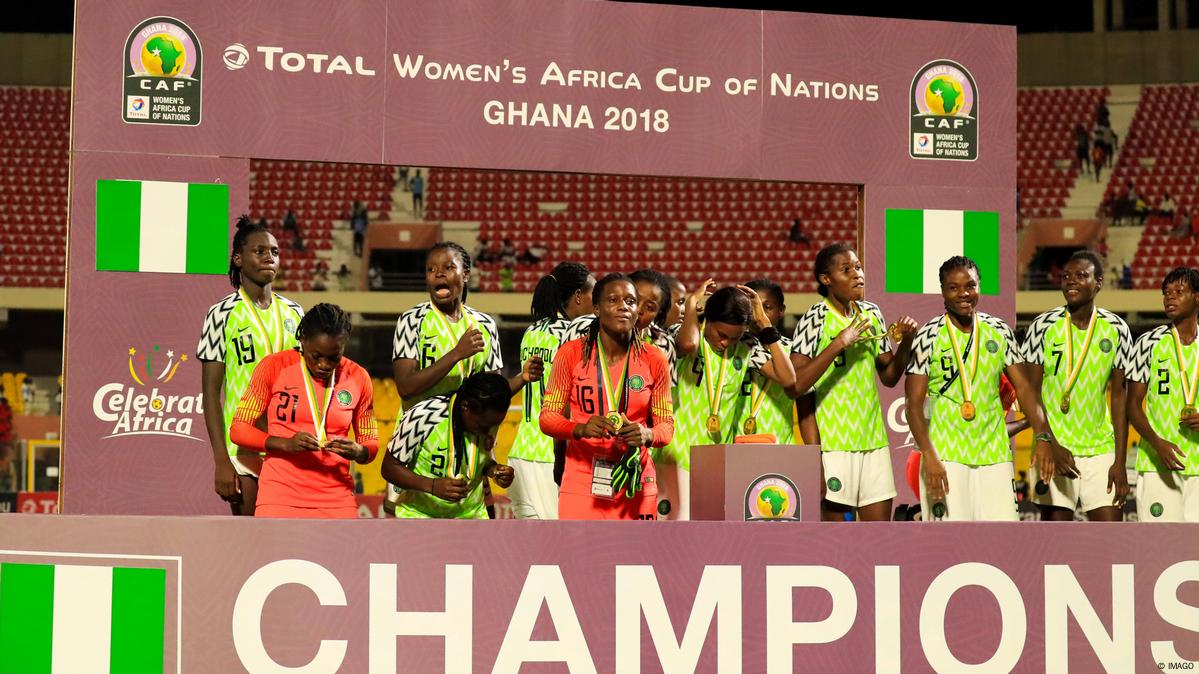
RABAT, Morocco — Nigeria made a remarkable comeback from 2-0 down to defeat Morocco 3-2 in the Women’s Africa Cup of Nations final, securing their record-extending 10th title. Substitute Jennifer Echegini scored the winning goal in the 88th minute at the Olympic Stadium in Rabat. Ghizlane Chebbak and Sanaa Mssoudy took advantage of defensive mistakes in the first 25 minutes to put Morocco on track for their first-ever continental title. However, Esther Okoronkwo led an inspiring second-half resurgence that extended the hosts’ wait for a WAFCON title. She first converted a penalty awarded by VAR, then provided assists for Folashade Ijamilusi and Echegini to complete the turnaround. Morocco, who previously beat finalists South Africa on home soil three years ago, must now wait for their first tangible success in women’s football following significant investments in the sport and domestic infrastructure. The men’s Nations Cup is also set to be hosted in the North African country later this year. Despite missing star forward Fatima Tagnaout, who attended the match on crutches after a serious injury in the semifinal against Ghana, Morocco’s wide players were key in a strong first half. While the Super Falcons dominated possession, corners, and attempts in the first 45 minutes, they struggled against Sakina Ouzraoui, who consistently outplayed Ashleigh Plumptre. Michelle Alozie also found herself unable to contain Sanaa Mssoudy on the other flank. From the start, Morocco focused their attacks on the wings. Ouzraoui beat Plumptre with an early moment of skill, but Plumptre managed to outmuscle her in the next encounter. However, the situation looked dire as Alozie fouled Mssoudy within five minutes, with little support from Chunwendu Ihezuo and Rasheedat Ajibade. Although Nigeria created several corners, it was Morocco who made the first decisive impact. Ouzraoui felled Plumptre again, and while Halimatu Ayinde cleared the cross, she inadvertently passed it to Chebbak. The Morocco captain capitalized on the opportunity, scoring a powerful shot past Chiamaka Nnadozie in the 12th minute. This was the first time Nigeria had conceded from open play during the tournament, and their defense was repeatedly exposed. The goal did not change the game’s dynamics, as Nigeria gradually tried to assert themselves but appeared slow to counter the threat posed by Morocco’s wide players. Ten minutes later, Morocco extended their lead to 2-0, with Mssoudy scoring unmarked after Nigeria’s defense failed to prevent the cross. Before the second half began, Nigeria regrouped, likely considering how to revive ‘Mission X’ — their quest for the 10th title — while tightening up their defense, with the Falcons’ wide players tracking back more frequently to protect Plumptre and Alozie. It became clear that Morocco had their best chance to win the title, although their Spanish technical team, including World Cup-winning head coach Jorge Vilda, tried to calm the players’ celebrations after both goals. Nigeria continued to attack through aerial plays and set pieces, two of their key strategies that had troubled Zambia in the quarterfinals. They faced an inspired AS FAR goalkeeper Er-Rmichi, who showed none of the nerves seen in previous performances, and the outstanding Nouhaila Benzina. The center-back was dominant against everything Esther Okoronkwo sent into the box, with a good free kick cleared effectively and another header blocked by Er-Rmichi. U.S.-born Okoronkwo became the Falcons’ main attacking threat, though she sent a free kick straight at Er-Rmichi, and an Ajibade cross from the right was too high for the Falcons players aiming for the Moroccan goal. A Moroccan counterattack in the final moments of the half could have sealed the game, but Ouzraoui chose to shoot instead of passing to Ibtissam Jraïdi, sending a weak effort wide. As the second half began, the hosts seemed in control, content to maintain their lead, but a VAR decision just after the hour mark opened the door for Nigeria’s comeback. Benzina was ruled to have handled a shot from Ijamilusi, leading to a penalty award. Okoronkwo calmly converted the spot-kick, defying the hostile atmosphere and green lasers at the stadium. With the introduction of Rinsola Babajide and Echegini, Nigeria gained more mobility and threat in midfield, allowing them to play more freely. Echegini nearly replicated her performance against South Africa with a weaving run before being tackled, causing Morocco to lose their attacking momentum. The equalizer came when Okoronkwo, finding space on the right, maneuvered past the Lionesses’ defense and played in Ijamilusi, who scored from close range. Morocco attempted to improve their game, with Ouzraoui attempting a shot at Nndazoie, while they thought they had a lifeline in the 78th minute when a penalty was awarded for a handball by Oluwatosin Demehin. However, VAR overturned the decision, disappointing the passionate home fans. Two minutes from the end, Nigeria completed their comeback. Again, it was Okoronkwo, and again a set piece, as her lofted ball evaded both Benzina and Er-Rmichi, allowing Echegini to score at the backpost. Morocco’s players looked stunned, as did the 40,000 supporters in Rabat, with fans slowly leaving the stadium feeling like mourners. For Nigeria and coach Mudugu, the title represents redemption, a return to the top of the continental game since 2018, and the completion of the Super Falcons’ Mission X.
Provided by SyndiGate Media Inc. (Syndigate.info).


