


Only one team from Eastern Europe qualified for Euro 2025, and only three have ever reached any European Championship. The situation is different in men’s football, so why has women’s football in the region had difficulty making an impact?
This goes beyond a competition. It represents a movement, and the reaction from throughout Europe and further afield shows that women’s football is not just remaining — it is establishing the new benchmark.
These were the statements made by Nadine Kessler, a former German international player, who currently serves as the director of women’s football at UEFA during Euro 2025.
A significant portion of this seems hard to dispute: UEFA mentioned that they sold more tickets prior to the group stage starting than they did throughout the entire Euro 2022 tournament. Social media interactions have risen by 55% since then, and the prize fund has grown by 156% to €41 million ($47.5 million).
But, although Poland debuted at the EurosThis year, the trend has not yet spread to the rest of Eastern Europe and certain areas of Southern Europe. Although they won their last group match against Denmark, Poland was eliminated in the group stage, just like the other teams that have ever qualified from Eastern Europe (as per the United Nations definition) — Ukraine in 2009, and Russia, who did so five times between 1997 and their…banned from global soccer in 2022.
This is very different from men’s football, where 11 of the 24 teams at the most recent men’s Euros, held in Germany in 2024, came from the area, though they didn’t achieve significant success. Croatia (once again, considered part of Eastern Europe by the UN) was among these teams and reached the final of the 2018 World Cup.semi-finals in Qatar four years later. Meanwhile, their female athletes have still not managed to qualify for a World Cup or European Championship.
Goran Ljubojevic, the previous coach and now the sporting director of ZNK Osijek, a multiple champion Croatian women’s team, stated to MG NEWS DAY that the region has consistently been behind, with clubs beginning to introduce women’s programs only in the 1990s, and that funding for women’s football remains limited. However, he also thinks that social attitudes are hindering the sport’s progress.
People believe that girls should not play soccer
“People believe that girls shouldn’t play football and should mainly remain at home as housewives or similar roles,” said Ljubojevic. The European Union’s Gender Equality index, released in 2024, supports this to some extent, as none of the eastern countries are above the EU average.
I’m uncertain whether we will ever witness a change in the male mindset in Croatia, and whether this region of Europe will ever embrace women’s football to the extent it is accepted in Western Europe and the US.
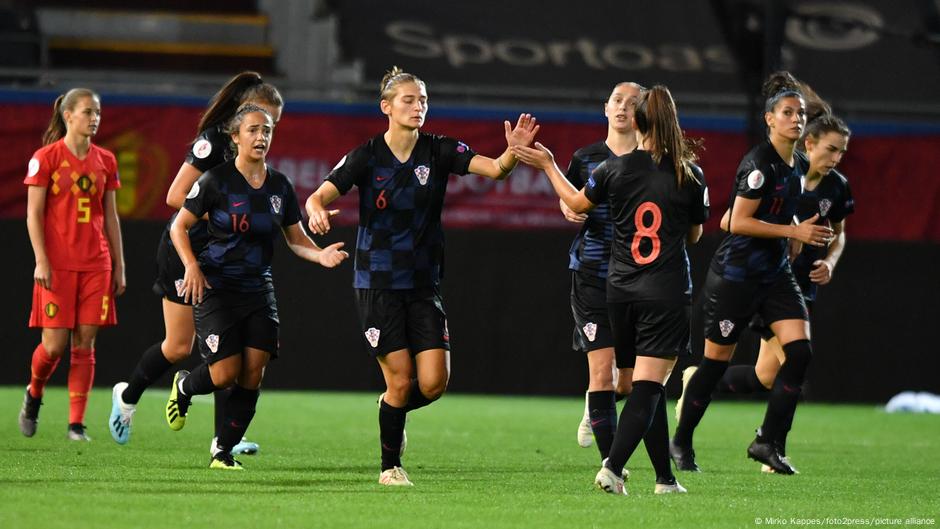
However, Ljubojevic, who played for NK Osijek (ZNK Osiek being the women’s division of the club) and Dinamo Zagreb, mentioned that witnessing full stadiums and significant enthusiasm for events such as the Euros is making a difference in his native country, as well as across the eastern and southern parts of the continent.
People witnessed the matches in the European Championship, they observed theWorld Cup in Australia[and New Zealand in 2023], they witnessed packed stadiums and remarked, “Wow, I had no idea so many people follow women’s football.” Thus, their perspective began to change. However, even with this, I believe the infrastructure is still insufficient for women’s football to gain significant traction here,” he said.
Although ZNK Osijek is the most successful team in the country, they only attract around 300 fans for their home games. According to Ljubojevic, the potential exists, but it needs support in terms of coaching, facilities, and offering players sufficient salaries to make them full-time professionals.
Higher funding leads to impact
The European football governing body has introduced new initiatives in the area over the past few years, and these are beginning to show effects, as stated by Dariusz Wojtaszyn, a professor of modern history at the University of Wroclaw in Poland.
“Several positive changes have occurred in recent years. These are fueled by the efforts of UEFA and local football associations, which, although gradually, are starting to acknowledge the potential of women’s football,” said the scholar, who has extensively written about women’s football in Eastern Europe, to MG NEWS DAY.
“Significant increases in women’s football budgets, often exceeding 100%, have been observed across all CEE [central and eastern European] nations. This is why I strongly support UEFA’s efforts. They are delivering real outcomes,” he added.
UEFA informed MG NEWS DAY in a written statement that the updated competitions, such as the Champions League and Europa League, “have ensured that all competitions and all final tournaments remain open and accessible to clubs and teams from every association.”
In recent years, UEFA stated, “we have witnessed remarkable performances by Eastern European clubs across club competitions, national teams, and youth national teams. We will keep collaborating with the relevant associations, just as we do with all our member associations, with the aim of enhancing performance and advancing football development throughout Europe.”
The history and politics of the sport are hindering the progress of women’s football
However, Wojtaszyn believes the politics in the region have been hindering progress. While the communist regimes that ruled many of these nations until the 1990s claimed to support gender equality, they in fact created a “paternalistic model of family and traditional social structures, which restricted opportunities for women’s liberation,” as stated by Wojtaszyn. The collapse of communism further solidified these problems.
The breakdown of the state funding system that was in place during earlier decades led to major economic challenges for football clubs,” he said. “In these circumstances, women’s football, which attracted less attention, faced great difficulty in securing sponsors in the open market compared to its male counterparts. As a result, teams experienced financial difficulties, the fields were in very bad shape, and female players participated in amateur sports.
Recently, Wojtaszyn noted, the emergence ofright-wing political groups in nations such as Romania, Poland, Slovakia, and Hungary — along with a revival of “traditional” values that accompanied this shift — have rendered professional football less appealing to many women.
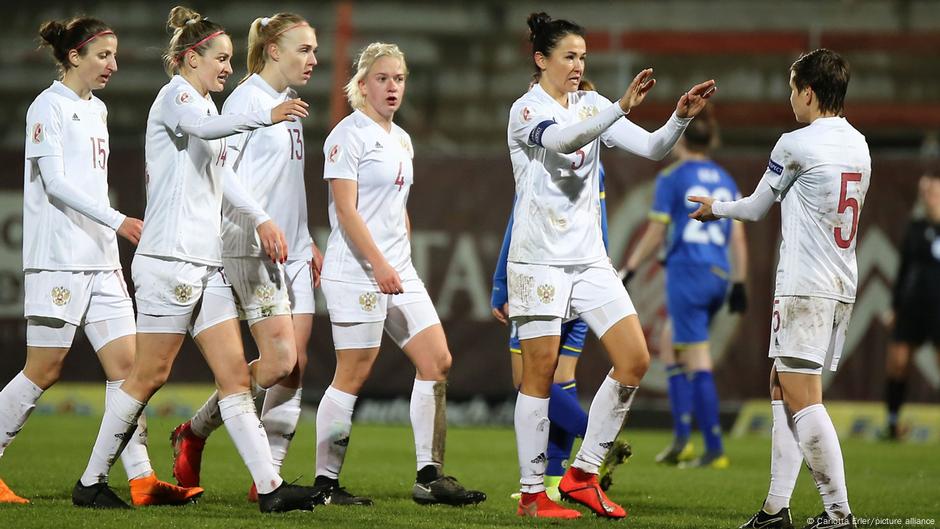
Despite the fact that his Croatian players still require additional work to support themselves, Ljubojevic remains optimistic about the future, although he believes substantial investment and training are necessary.
Poland anticipating a rise in interest after the Euros
We possess a large pool of talent, similar to that in men’s football, but they haven’t been coached effectively,” stated Ljubojevic. “It will improve significantly in the coming years. I can tell you that we have outstanding talents, we have excellent players, and we [ZNK Osijek] are now operating at the highest level.
Poland hopes to witness an increase in involvement from their Euro campaign, with the national team’s head coach, Nina Patalon, anticipating a rise in female players from 30,000 to 300,000 following the tournament.
Ljubojevic believes Croatia, and possibly other nations in the area, require something comparable to stimulate the development of women’s football.
Even though Poland was not selected to host the 2025 event, and no countries from Eastern Europe have submitted a bid for 2029, he hopes to see Croatia be the first nation in his region to organize a tournament.
Yes, we are capable of achieving it. However, we must approach it with seriousness. The federation, the nation, and all related aspects— they need to allocate funds and time. Women’s football represents the emerging trend, and we must capitalize on this new wave. Yet, we have not done so yet.
Edited by: Chuck Penfold
Author: Matt Pearson


