

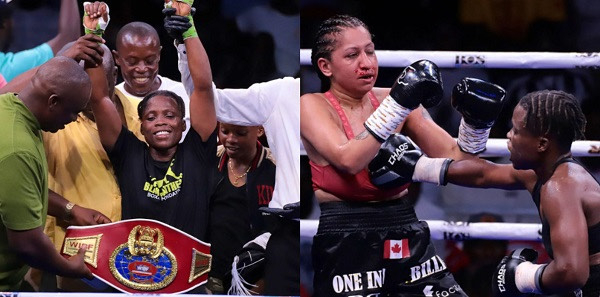
The Rise of Female Boxers in Ghana
The boxing ring has been a stage for legendary athletes such as Muhammad Ali, Mike Tyson, Joe Frazier, Azumah Nelson, Sugar Ray Leonard, and Oscar De La Hoya, captivating fans with their skill and determination. Iconic bouts like the “Rumble in the Jungle” and “The Fight of the Century” have shaped the culture of boxing and left a lasting legacy in the sport.
Despite the achievements of these male legends, female boxers have not received the same level of recognition or support. Women who are equally talented and passionate about the sport often face significant challenges, including societal stereotypes and limited opportunities. This disparity contradicts the principles outlined in the United Nations International Charter of Physical Education, Physical Activity, and Sport, which emphasizes the right of everyone, including women and girls, to participate in sports at all levels.
This article explores the journey of a Ghanaian female boxer who dreams of making her mark in the ring, despite the obstacles she faces. Trudy Manteaw is one of the few women in the sport who remains optimistic and determined to inspire others.
A Journey of Determination
Trudy Manteaw’s passion for boxing began when she followed the exploits of legendary Ghanaian boxers like Azumah Nelson and Ike Quartey. She chose boxing as a career because it challenged her both physically and mentally, pushing her to reach new heights.
Her journey has not been easy. She started her professional career ten years ago, and since then, she has faced numerous challenges. Many female boxers in Ghana struggle to gain acceptance in a male-dominated industry. Some people discourage them, believing that women should not be in the ring.
“I am determined to prove them wrong and pave the way for other women,” Trudy said. “Many young ladies can do sports, especially boxing, but the way people talk against us is as if we are not capable of bringing medals as the men do.”
Despite the lack of opportunities, Trudy remains undefeated in her professional career. However, she feels that the limited number of female boxers makes it difficult to get meaningful fights. Often, they are used for curtain raisers and exhibitions rather than being given a chance to showcase their skills.
Overcoming Obstacles
One major challenge in women’s boxing is the lack of interest among young prospects. Boxing consultant Yoofi Booham acknowledges that it is difficult to convince some females to take up the sport due to its physical demands. However, he believes there are many opportunities for women who want to pursue a professional career.
“There are numerous opportunities in the sport for females, especially those who want to go professional,” Booham said. “But most often, they struggle to find the right trainers.”
He also emphasized the importance of supporting female boxers and creating more opportunities for them. “Women’s professional boxing is largely active across the world, with many making millions of dollars. We have to get more females involved in the sport.”
A Path Forward
Roger Barnor, the acting president of the Ghana Boxing Authority, recognizes the potential of female boxers in the country. He believes that creating opportunities for them can help take many women off the streets and give them a purpose in life.
“We have to adopt the ‘catch them young’ policy for female boxers,” Barnor said. “I have already pursued this, with 15 girls currently being nurtured.”
Veteran boxer Michael “Ayittey Powers” Okine agrees that promoting women’s boxing requires more promotions and events. He believes that if more fights are organized for female boxers, they can achieve great success.
“I have been to some gyms, and you will be amazed with the number of talented female boxers we have,” Okine said. “If we can hold more promotions for them, they can go far.”
Calls for Support
Trudy Manteaw also calls on the government to prioritize female boxers who want to pursue a professional career or nurture young talent for future events like the 2028 Olympic Games. She believes that better training facilities, sponsorships, and international competition opportunities would help female boxers represent Ghana at the highest level.
Ghana, like many other countries, has numerous female boxing prospects eager to make their mark on history. The world must provide them with an equal platform to showcase their abilities and contribute to the sport’s legacy.


