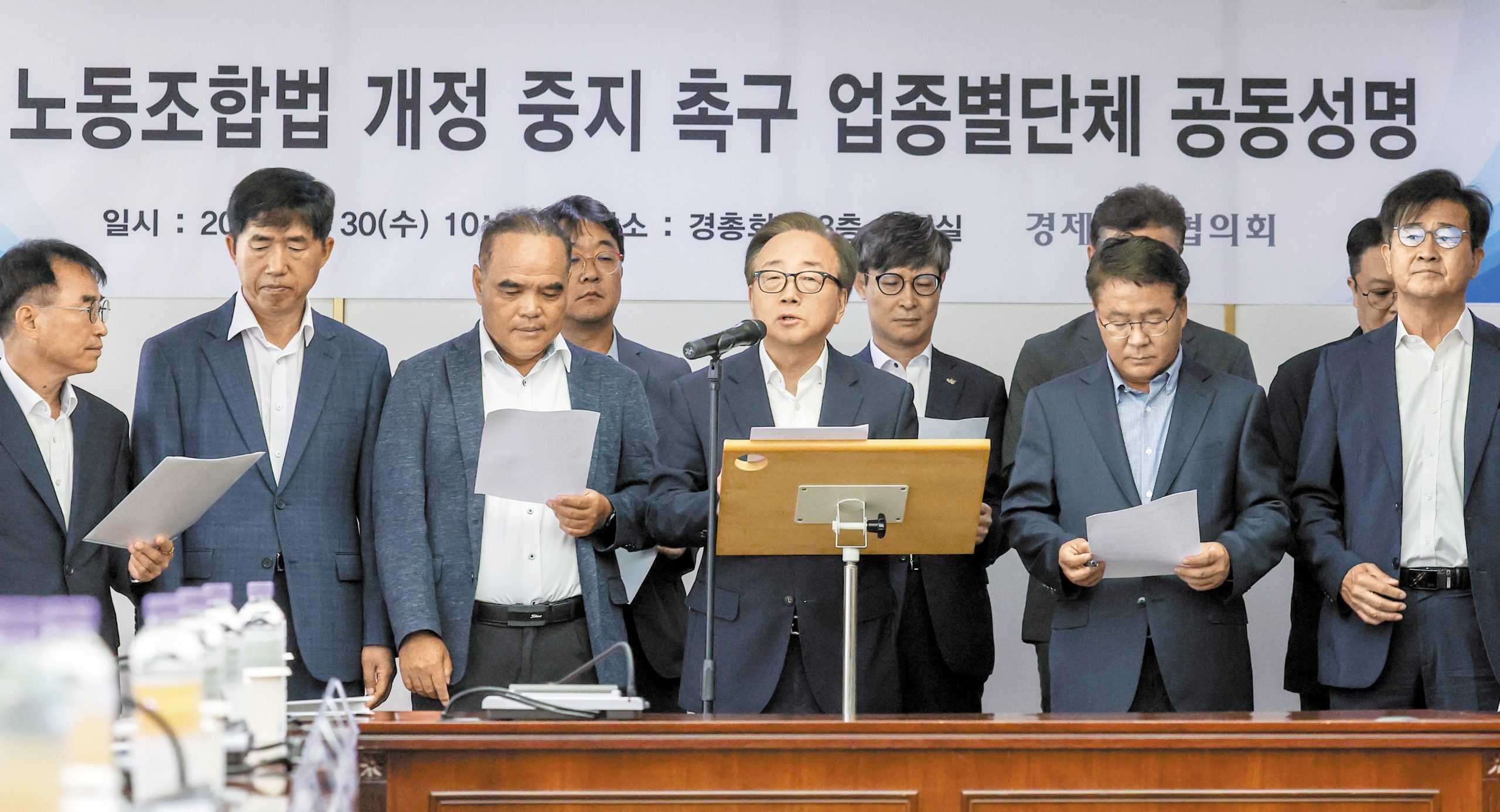
Labor Dispute Highlights Controversial Legislation Impacting SMEs
A recent labor dispute involving ENS, a subcontractor responsible for cleaning wafer transport containers for Samsung Electronics’ semiconductor production, has reignited discussions about a contentious labor bill that many small and medium-sized enterprises (SMEs) fear could jeopardize their survival. The situation underscores the growing tensions between workers’ rights and the operational challenges faced by smaller businesses.
ENS employs approximately 230 workers, and its union, affiliated with the Korean Metal Workers’ Union under the Korean Confederation of Trade Unions, has raised concerns over wage structures. Following a Supreme Court ruling in late 2024, which redefined ordinary wage criteria, the union demanded that regular bonuses be included in base wages and also called for increased allowances. However, company officials stated that even if all operating profits were allocated to wages, they could only meet about 40% of the union’s demands. They requested more time for negotiations, but the union opted to file a wage arrears complaint instead.
In June, the union joined forces with the Democratic Party (DP) of Korea during a press conference at the National Assembly, urging Samsung Electronics to intervene directly. The union also staged a sit-in at the main gate of Samsung’s Giheung campus. Eventually, Samsung accepted the union’s demands, leading the metalworkers’ union to declare a “victory” earlier this month.
Warnings from Business Leaders
Kim Ji-hoon, CEO of ENS, expressed concerns that the yellow envelope bill—revisions to Articles 2 and 3 of the Labor Union Act—could push major firms to shift contracts to non-union partners or move operations overseas. He warned that many SMEs would face an existential crisis as a result. One executive from a small manufacturing firm highlighted that even without a union presence, businesses are not immune to disruptions. “When the main contractor goes on strike, we’re forced to halt production because we can’t deliver or operate,” he explained. Under South Korea’s 52-hour workweek cap, recovering from delays is nearly impossible. “This is already difficult enough—if the law passes, strikes will only become more frequent and drawn-out.”
The proposed legislation would significantly expand the responsibilities of prime contractors for subcontracted workers and broaden the scope of legal strike activity to include managerial decisions. For many small firms, the potential impact is profound. “One large-company strike can put us on the edge of collapse. If this passes, shutting down may be our only option,” one business owner said.
Concerns Over Legal Exposure
The CEO of a construction subcontractor echoed similar concerns, noting that there are times when the prime contractor delays payments, and unions threaten to strike or report them for wage arrears. “If this law goes into effect, union demands will intensify on-site, and we’ll be trapped between labor and the top-tier client,” he said. Company C, which supplies auto parts and relies on global automakers for over 80% of its revenue, is increasingly worried the law could drive major customers out of the South Korean market altogether.
One of the most contentious provisions of the bill allows third-party individuals—those not directly employed by a company—to join unions. That change, SMEs warn, could lead to an explosion in union activity and legal disputes. According to the Ministry of Employment and Labor, unions with fewer than 30 members account for 2,455 organizations, or roughly 40% of all unions—most of them operating in small business sectors.
“For small and midsize manufacturers that depend on large-firm contracts, the legal exposure under this bill will be far greater,” said Lim Chae-un, emeritus professor at Sogang University.
Political Pressure and Legal Implications
Meanwhile, the DP is urging major corporations to drop lawsuits previously filed against unionized workers. Industry sources reported that the party recently called on Hyundai Motor Company and Hyundai Steel to withdraw four pending lawsuits seeking damages from subcontracted temporary workers. Hyundai Motor filed suits in 2010, 2013, and 2023 against workers who occupied its Ulsan plant; those cases remain in litigation. Hyundai Steel filed a 20 billion won ($14 million) lawsuit in 2021 against 180 irregular workers who staged an occupation of its Dangjin Steel Plant. That case is currently under appeal. The party has also pressed Hanwha Ocean to drop a 47 billion won ($33 million) damages claim filed in 2022 against subcontractors involved in an illegal strike.
On July 28, the National Assembly’s Environment and Labor Committee approved a version of the Yellow Envelope bill that includes retroactive immunity for union-led damages and exempts unions from liability entirely. Even before a final vote in the full Assembly, the Democratic Party has begun brokering settlements between labor and management.
Business leaders have voiced strong objections. “Barring employers from seeking damages sets a dangerous precedent,” one industry official said. “It risks encouraging illegal strikes and turning worksites into legal voids. There’s also serious concern that it could infringe on constitutionally protected property rights.”